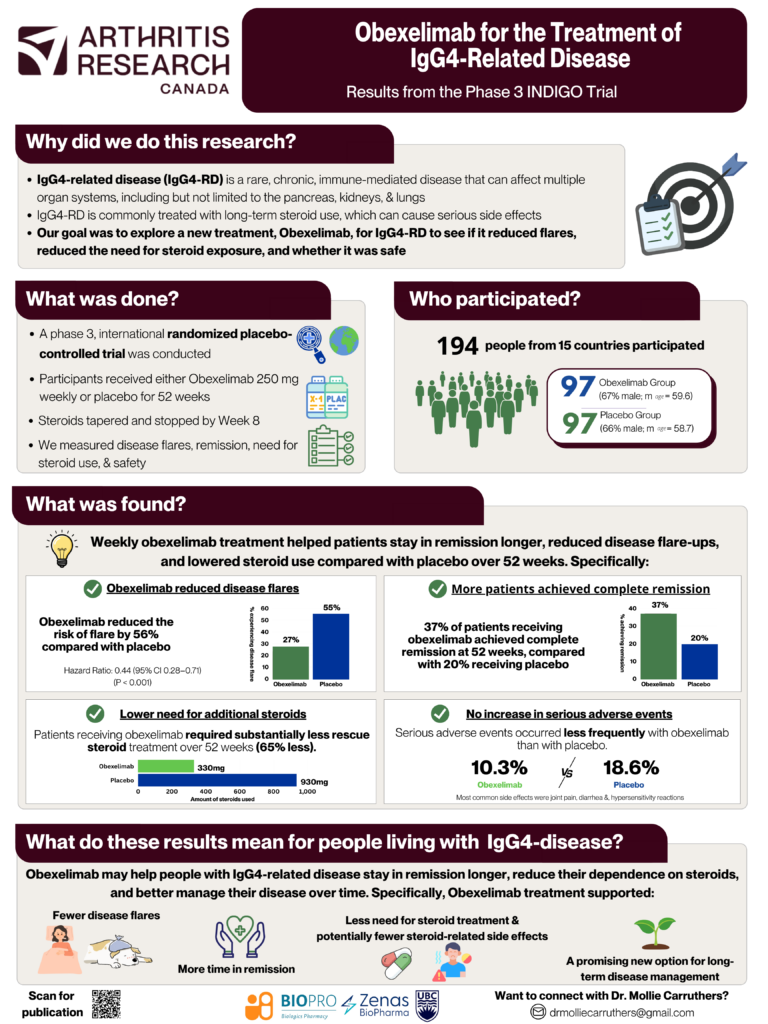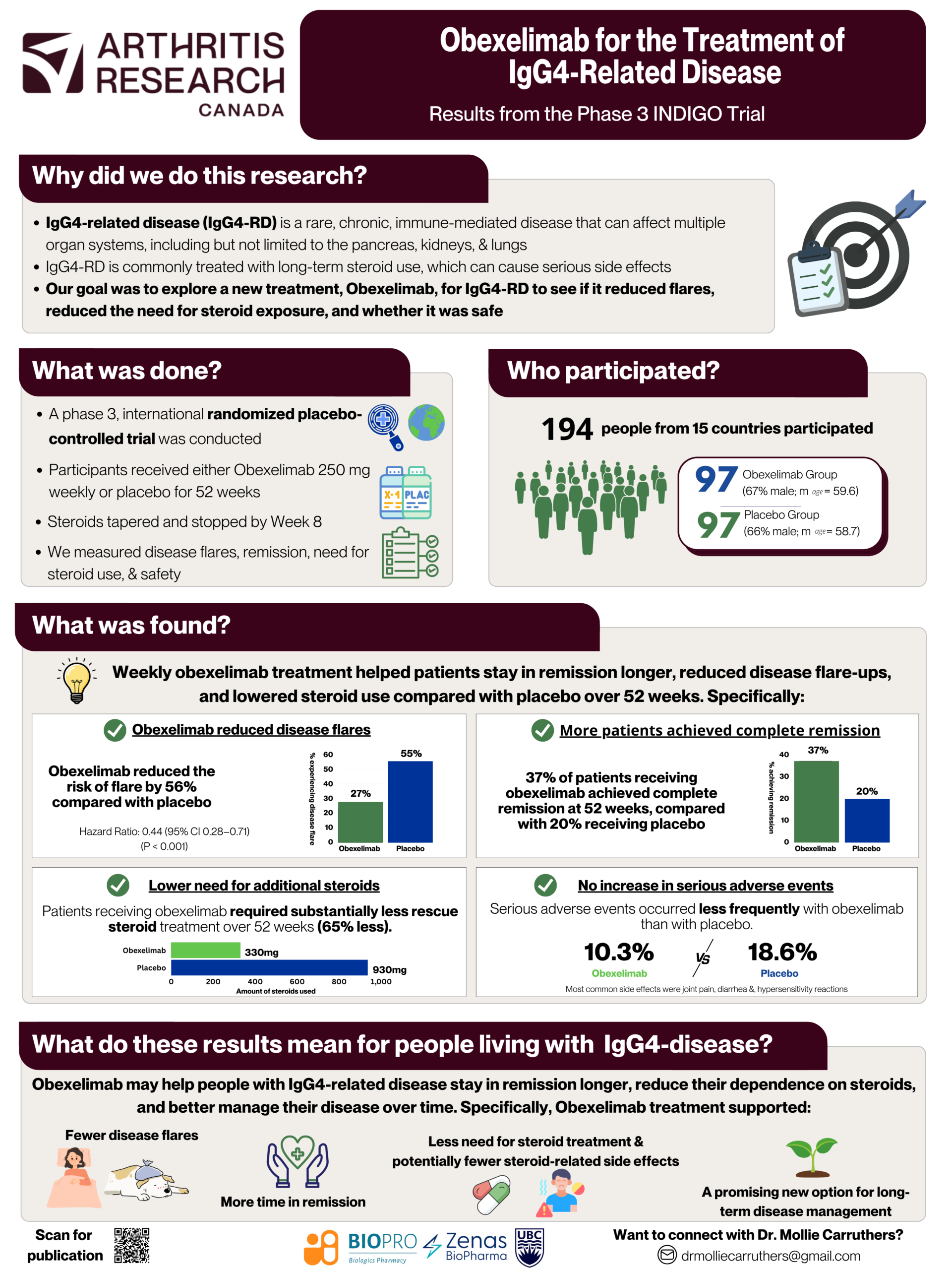
Vancouver (June 8, 2026) — A new international clinical trial has found that obexelimab, an investigational treatment for IgG4-related disease (IgG4-RD), significantly reduced disease flare-ups, increased remission rates, and lowered the need for steroid treatment. IgG4-RD is a rare, chronic, immune-mediated disease that can affect multiple organ systems, including but not limited to the pancreas, kidneys, and lungs.
The study was published in the New England Journal of Medicine and led by the following team: Arthritis Research Canada clinician investigator Dr. Mollie Carruthers, rheumatologists Dr. Anthony So and Dr. May Kazem, and Arthritis Research Canada research coordinator Makshada Kowlessur.
The trial enrolled 194 adults with active IgG4-RD from 15 countries. Participants received either weekly obexelimab injections or placebo injections for one year, while steroid treatment was gradually discontinued by week eight. While steroids are commonly used to control IgG4-RD, long-term use can cause serious side effects, and many patients experience disease flare-ups after treatment stops.
“People living with IgG4-related disease need treatments that can keep their disease under control without prolonged exposure to steroids,” said Dr. Carruthers, “These results suggest obexelimab offers a promising new option.”
Patients receiving obexelimab reduced the risk of disease flare by 56 per cent, with only 27 per cent of patients experiencing a flare during the study compared with 55 per cent in the placebo group. Patients receiving obexelimab were also 37 per cent more likely to achieve complete remission after one year required substantially less additional steroid treatment. Serious side effects, such as joint pain and diarrhea, also occurred less frequently among patients receiving obexelimab.
The findings suggest obexelimab is a promising treatment to help people with IgG4-RD stay in remission longer, reduce their dependence on steroids, and improve long-term disease management.
“IgG4-related disease is still unfamiliar to many people, and patients have limited treatment options,” explained Dr. Carruthers, “The success of an international trial like this is an encouraging step for both patients and researchers.”
Read the full study here.